· Events · 3 min read
Empowering AI-Enabled Research and Education: NRP Full-Day Tutorial at PEARC26
NRP presented a full-day hands-on tutorial at PEARC26 showcasing AI workflows, JupyterHub, LLM services, and agentic AI on Kubernetes.
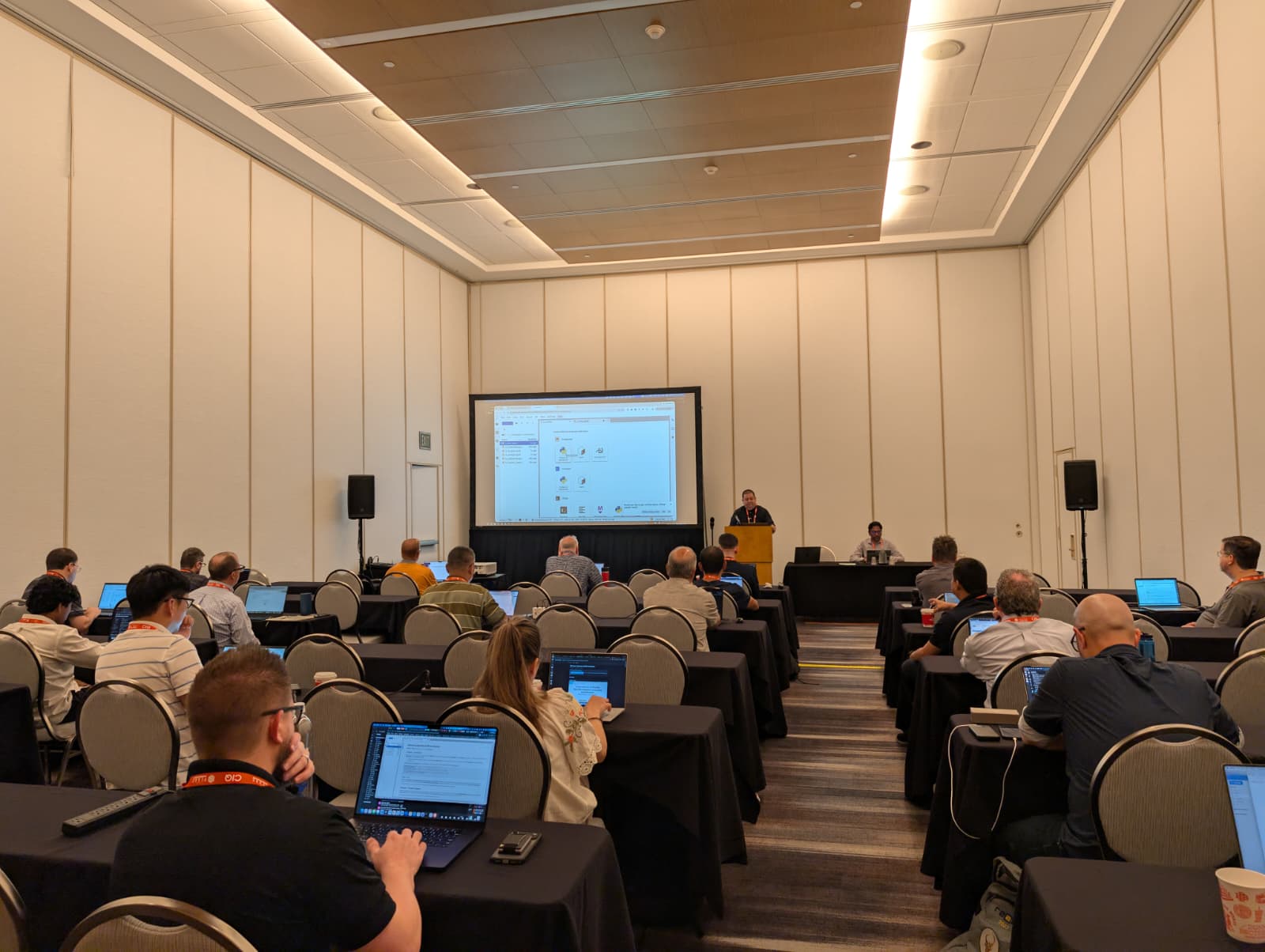
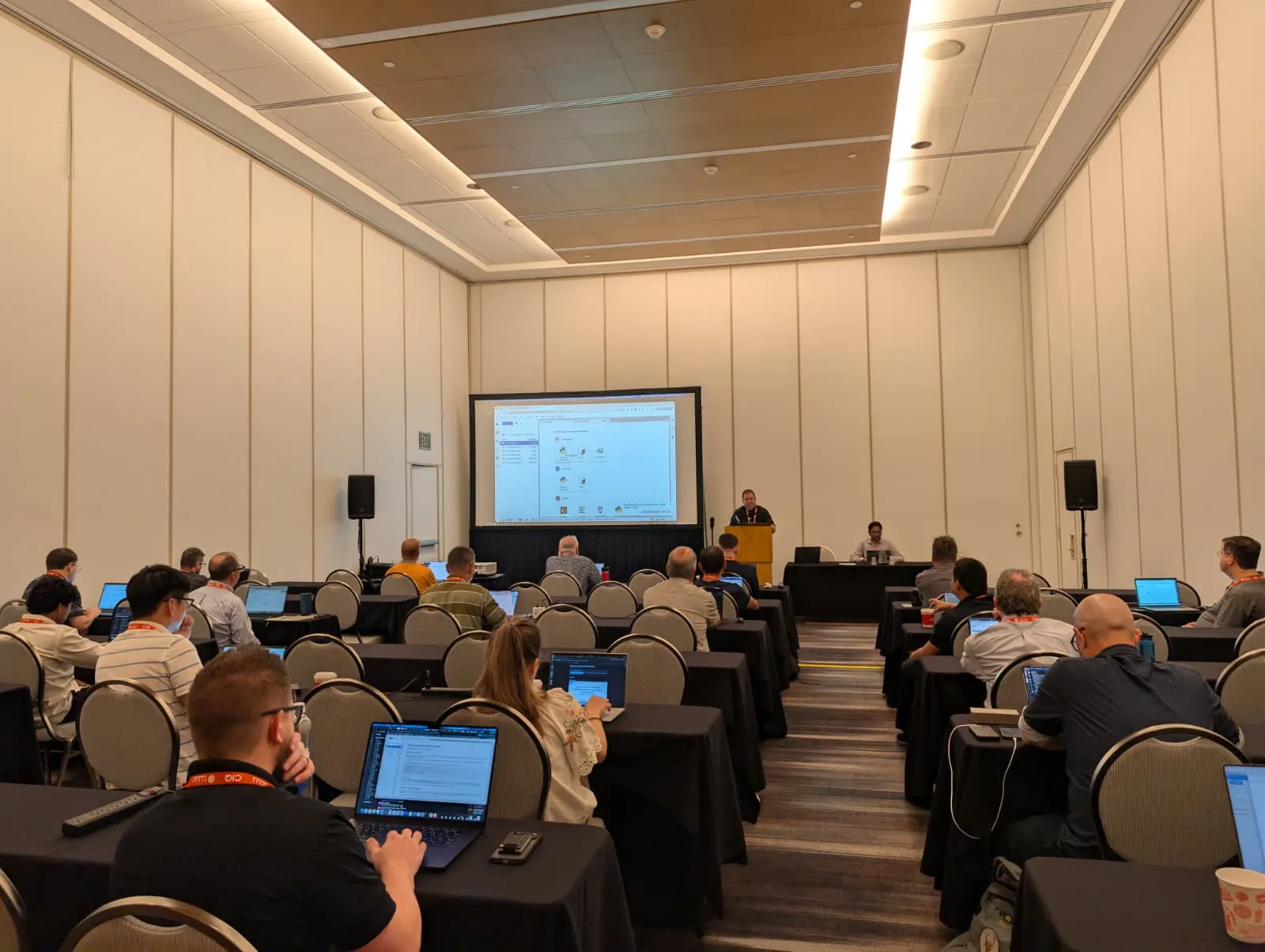
Kubernetes-based national cyber infrastructure (CI) is increasingly enabling new models of AI-enabled education and research. The National Research Platform (NRP) showcased this vision through a full-day tutorial at PEARC 2026, held in Seattle, Washington, providing attendees with hands-on experience in interactive AI workflows, classroom instruction, and research applications on a federated Kubernetes platform.
📚 Tutorial Overview
Title: Using the National Research Platform (NRP) for AI-Enabled Education and Research
Format: Full-day hands-on tutorial
Presenters: Mahidhar Tatineni, Dmitry Y. Mishin, Mohammad Firas Sada, and Daniel Diaz
This tutorial introduced participants to using the NRP — an NSF-funded Kubernetes-based system — for interactive AI workflows, classroom instruction, and research applications. Attendees gained practical experience with:
- AI-integrated Jupyter notebooks for interactive data science and machine learning
- Large Language Model (LLM) services hosted on NRP for natural language-based tools
- Interactive development environments including Coder IDEs
- Scalable course infrastructure such as JupyterHub for educational deployments
- Diverse hardware acceleration using CPUs, GPUs, and Qualcomm Cloud AI 100 Ultra GenAI cards
The tutorial demonstrated how educators and researchers can leverage national AI infrastructure to build reproducible, accessible learning and research environments at scale.
🌅 Morning Session: Getting Started with NRP
The morning session was designed for beginners and focused on foundational concepts and hands-on interaction with the platform. Topics included:
- Introduction to the National Research Platform — architecture, federated model, and participating sites
- Navigating NRP — user portals, JupyterHub, and interactive environments
- Running AI workloads — using CPU and GPU resources for machine learning tasks
- Exploring LLM services — interacting with hosted large language models through APIs and notebooks
- Practical exercises — guided hands-on sessions on the live Nautilus cluster
Participants left the morning with a solid understanding of how to access NRP resources and run interactive AI workflows.
🌆 Afternoon Session: Advanced Topics
The afternoon session built on the morning’s foundations with advanced topics tailored for experienced users, educators, and infrastructure operators:
Custom JupyterHub Deployment
Attendees learned how to deploy and configure their own JupyterHub instances on NRP, enabling scalable, multi-user educational environments. This includes:
- Setting up authentication and user management
- Configuring resource limits and GPU access
- Integrating LLM services into classroom notebooks
- Reproducing course infrastructure across institutions
Agentic AI Workflows
A highlight of the afternoon was the introduction to agentic AI workflows — autonomous AI systems that can plan, execute, and iterate on complex tasks. Demonstrations included:
- Building AI agents that interact with NRP services
- Combining LLMs with tools for automated research workflows
- Designing reproducible agent-based experiments
- Exploring Qualcomm Cloud AI 100 Ultra cards for efficient inference
Qualcomm Cloud AI GenAI Cards
The tutorial emphasized practical usage of emerging hardware, including hands-on experience with Qualcomm Cloud AI 100 Ultra accelerator cards. These devices offer:
- High-throughput, low-latency inference for LLMs
- Energy-efficient AI workloads suited for edge and distributed deployments
- Integration with Kubernetes scheduling on NRP
🎯 Target Audience
The tutorial welcomed a diverse group of participants:
- Researchers interested in AI-enabled scientific computing
- Educators looking to incorporate LLMs and interactive environments into their courses
- Students seeking hands-on experience with national cyberinfrastructure
- Developers building applications on Kubernetes-based platforms
- System administrators managing federated research infrastructure
Prerequisites: A laptop with Wi-Fi and a web browser; optional kubectl installation for advanced exercises.
🔗 Resources
📖 Tutorial Materials: nrp-training/pearc26
📅 PEARC26 Session Page: ACM PEARC 2026 Schedule
Looking Forward
The success of the PEARC26 tutorial underscores the growing demand for accessible, national-scale AI infrastructure that supports both education and research. As the NRP continues to expand its capabilities — from traditional GPU workloads to emerging technologies like Qualcomm Cloud AI accelerators and agentic AI frameworks — we invite the broader community to join us in building the future of cyberinfrastructure-enabled science.
Stay tuned for updates on upcoming workshops, new service deployments, and opportunities to collaborate with the NRP team.
This blog post was edited using NRP’s publicly hosted LLMs. Learn more.